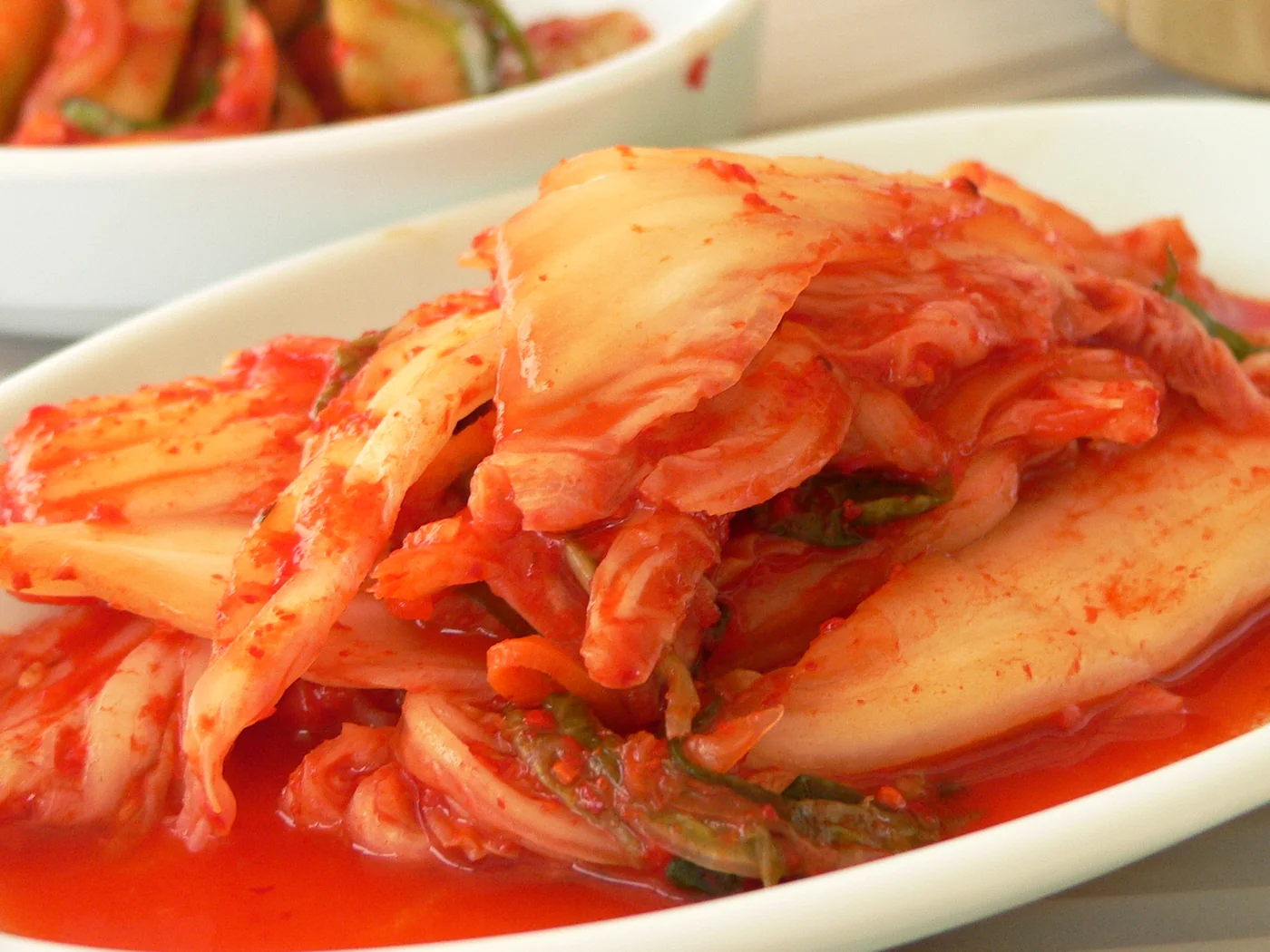
Cabbage Kimchi
Korean Cuisine Kimchi (김치), also spelled kimchee or gimchi, is a Korean dish of pickled vegetables, usually napa cabbage or Korean radish and is commonly served as a side dish. It is usually fermented in a brine of anchovy sauce, ginger, garlic, green onion, and chilli pepper. There are countless varieties—at least as many as there are households. The follow
Before you start
A quick setup makes the method easier to follow and keeps important steps from being missed.
Preparation checklist
- Read all 12 method steps from beginning to end.
- Measure and arrange all 13 listed ingredients.
- Keep the recipe open and follow each step in order; the source does not state a total time.
Recipe notes & preparation tips
Korean radishes are large (about ½ to 1 kilogram). Japanese (daikon) radishes or a larger quantity of small European radishes could substitute.
The brine can be varied to include many other ingredients. Be creative.
The aekjeot can be replaced with moderate amounts of saeujeot (Korean salted tiny shrimp), raw butterfish, or raw oysters. Seafood can also be left out entirely, although an appropriate amount of salt needs to be added in place of missing jeot gal. Alternative flavors can include Asian pears or tangerines.
Adapted from the source recipe's notes.Method
- 01
Quarter the napa cabbage, wash, and drain.
- 02
Combine coarse sea salt and water.
- 03
Put cabbages in salted water and take out one at a time to get salt down.
- 04
Add cabbages to a container. Pour salted water over top, and set aside for at least 6–8 hours (overnight is great). The cabbage should be soft enough to bend.
- 05
Wash cabbages and drain well.
- 06
Combine gochugaru, salt, sugar, jeot gal (Korean fish sauce), minced garlic, and minced ginger.
- 07
Mix the onion, carrot, radish, and green onion into the chilli powder mixture.
- 08
Take one cabbage, and stuff the above mixture between every layer.
- 09
Try to fold the cabbage in half. With 2 outer leaves, wrap the whole thing securely.
- 10
Put cabbages in an airtight container, and let it sit at room temperature overnight.
- 11
Refrigerate for 2–3 days at minimum. After a few days, you will notice some liquid. This is totally normal and a sign that the kimchi is ripening.
- 12
Enjoy your kimchi!
Ready to serve
Serve the dish as directed and enjoy it while it is at its best.
Bon appétit — enjoy your meal!Source & licence
This recipe was adapted and reformatted from Wikibooks Cookbook . Text: CC BY-SA 4.0. Image: CC BY-SA 2.0, credited to Nagyman , a flickr user; view original image record .
More from International
 International
"Favourite" salad
How to prepare "Favorite Salad": Bread, Mayonnaise, Garlic and Carrots. Step-by-step recipe with a photo, 18 stages, the total time is 30 minutes.
 International
"Gelak Pilaw," pilaf with meatballs
Learn how to make "Gelak Pilaw," pilaf with meatballs with 7 ingredients and 11 clear steps.
 International
"Grace" salad
Learn how to make "Grace" salad with 7 ingredients and 8 clear steps.
 International
“Original” pork salad with kiwi and eggs
How to prepare “Original” pork salad with kiwi and eggs: Lettuce leaf, Pork in / k, Kiwi and Eggs (quail or chicken C2-C3) - 6 pieces.